Friday, September 5, 2025

The Upgrade Files: Case 17 – Officers (Rebels)

Where the Empire drowns in a sea of defensive tech and ruthless enablers, the Rebel officer suite leans into utility, flexibility, and squadron synergy. And like their Imperial counterparts, some of these officers are so good they’re practically auto-includes, while others gather dust in the binder.

The officer slot is precious real estate on Rebel ships — it’s almost always filled, but with fewer standout options than the Empire has. That means when an officer is strong (Toryn Farr, Adar Tallon, Lando), they show up everywhere. When one is weak, you rarely see it at all. Let’s dive in.


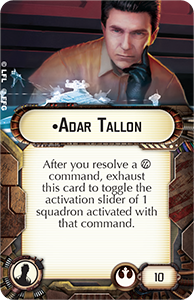
Adar Tallon

Ten points is a lot, but not when you’re giving a 20+ point ace a second swing every round. And of course, it’s a Rogue squadron you’re recycling, so it doesn’t even need a command for the follow-up. Luke, Lando, Dutch, Han — the list of abusers is long. It’s thematic, it’s fun, it’s extremely strong. Too strong, maybe.

Verdict: Leave as is or consider a tweak, such as “cannot affect Rogues”. Okay, okay, I can already hear the enraged screaming, so I'll back off!

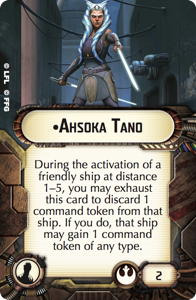
Ahsoka Tano (Officer)

She’s my BAE, but let’s be real: 2 points is criminally underpriced. Turning any token into the token you need most — instantly — is wildly powerful. She doesn’t generate economy, but she converts it perfectly. 

Verdict: Should be 3. If I didn't  like her so much I might say 4 😆

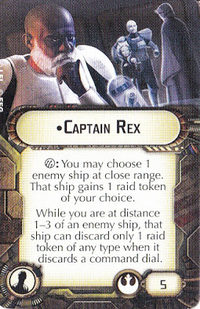
Captain Rex

Before ARC’s Draven, Rex felt overpriced — raid was weak for Rebels. Now, he’s fine. Rebels finally have a commander who makes raid a thing. 

Verdict: At 5 points he’s fair, though I wouldn’t balk at 4.

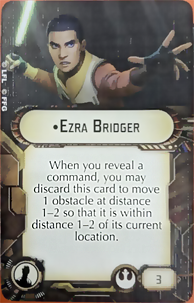
Ezra Bridger

Amazing utility. One-use only, but compare him to Titus or Ozzel and his 3-point price looks laughable. Unlike them, he can’t be Vader-choked, which is a limitation, I guess. He’s common, potent, and arguably too cheap. 

Verdict: Four points would be more reasonable, but 3 is fine, I suppose.

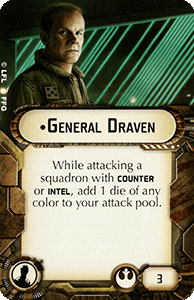
General Draven

A diet Kallus. Less consistent, less useful, but still has his place. Intel is rare these days, and counter squadrons aren’t everywhere either. Rarely seen, but not dead weight.

Verdict: If Kallus is 4, Draven should be 3. If Kallus is 3, Draven should be 2. 

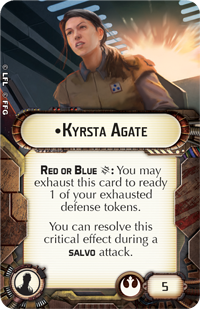
Kyrsta Agate (Officer)

Rarely seen, but not dead weight. Would be good if Rebel hulls actually had Salvo — they don’t outside the SH and Providence (or LFC and Reactive). That makes her niche at best. You’d think she’d shine on an Agate-commanded Starhawk, but of course you can’t take her there. 

Verdict: Either leave her at 5 and accept she’s rarely used, or try to drop her to 4. Doesn't really matter.

Lando Calrissian (Officer)

One of the best one-shot defensive officers in the game. For 4 points you can blank a catastrophic roll, swing an engagement, or save a flagship. A bargain. 

Verdict: Five wouldn’t be wrong, but his gamble factor makes 4 feel right.

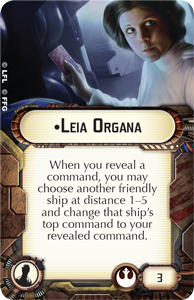
Leia Organa (Officer)

Niche but powerful. Timing and positioning matter, but she can swing a battle if used smartly. 

Verdict: At 3 points she’s fairly costed and doesn’t need a change.

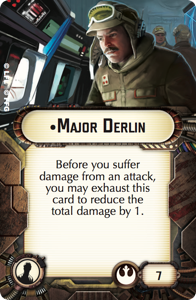
Major Derlin

A sturdy defensive piece. Sometimes feels pricey at 7, but when you compare him to Brunson (now 9), he holds up. 

Verdict: If Brunson dropped to 8, I’d say make Derlin 6. As is, he’s fine.

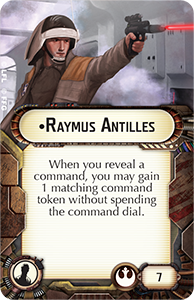
Raymus Antilles

Once a workhorse, now an overpaid relic. The extra token is nice, but not worth 7 in today’s token-rich economy. 

Verdict: Should be 5, same as my suggestion for Yularen, and balanced compared to Rune Haako (4).

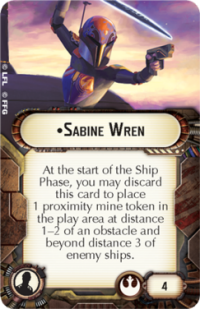
Sabine Wren

Not bad at 4, but not great either. 

Verdict: Swap her price with Ezra’s, and balance is restored.

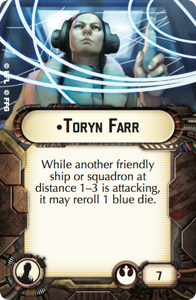
Toryn Farr

A cornerstone Rebel officer. Range-wide blue rerolls on squadrons is absurdly good. She’s been less visible in the age of rogue balls (who often fight far from ships), but she’s still one of the strongest Rebel officers in the game. 

Verdict: Price is right.

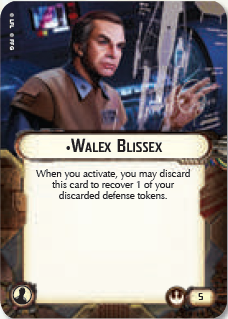
Walex Blissex

Still excellent, especially with Agate or Admonition. Defensive recursion is strong, and at 5 he’s balanced. 

Verdict: Leave him.

Wedge Antilles (Officer)

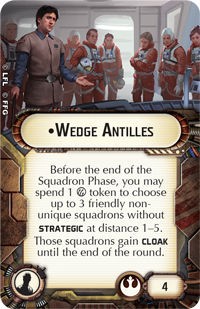
Niche but useful. Lets three squadrons slingshot forward for a token cost. Limited range and 3 squad restriction make him grounded, but in the right build, he’s great. 

Verdict: Three points would be more appropriate, but 4 is acceptable.


Final Verdict – Rebel Officers

Rebel officers lean heavily into squadron synergy and utility tricks, and it shows. Adar Tallon is too good with Rogues, Ezra is underpriced, and Ahsoka is a steal. On the defensive side, Lando, Derlin, and Walex provide solid protection without being oppressive.

The problem? Rebels don’t have the sheer breadth of options the Empire does. Too many Rebel ships take the same few officers, while others  languish. The slot is always filled, but variety is low.

Rebalancing a handful of costs (Ezra up, Ahsoka up, Raymus down, Sabine down) would go a long way to making the Rebel officer suite more competitive internally. Right now, Rebels live and die by a small handful of standouts.

Next Up: GAR/CIS Officers.

Thursday, September 4, 2025

The Upgrade Files: Case 16 – Officers (Empire)

The Empire doesn’t mess around with its officers. Where neutral officers are a mixed bag of staples and filler, the Imperial roster is stacked with power pieces. Some are defensive (MontferratBrunson, Iden, Needa, Tua), some are offensive (KrennicPalpatine, Vader), and others are unique tech tools (Chiraneau, Beck, Grand Inq) or token managers (Aresko, Grint, Vanto, Yularen).

But the flip side is cost and opportunity. The officer slot on any Empire ship is hotly contested — there are simply more good options than you can possibly fit. And yes, some officers are so good they almost always show up on the table, while others never leave the binder. Let’s break it down.


Admiral Chiraneau

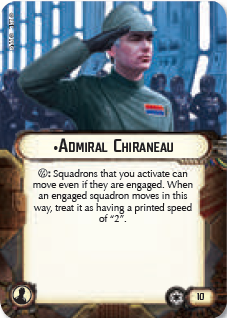
Funny one. Post-1.5, he should be better than ever — Intel was nerfed, and combined with the ace cap, Dengar isn’t everywhere anymore. Yet Chiraneau rarely shows up on the table. Mildly strange, but I guess Speed 2 is so restrictive that he isn't super desirable. His effect IS still valuable, especially paired with Mithel shenanigans, which is why he can’t cost less than 10. 

Verdict: If Mithel himself were toned down, Chiraneau could easily be 8.

Admiral Montferrat

Five points of pure conditional value. “Go fast, be obstructed, live forever.” The better you fly, the better he gets. 

Verdict: Excellent design, excellent cost (6 points would not be unfair).

Admiral Ozzel (Officer)

A fun one-shot trick — particularly nasty with Cataclysm or an SSD. Afterward, he’s just Vader choke fodder. 

Verdict: Balanced, leave as is.

Admiral Titus

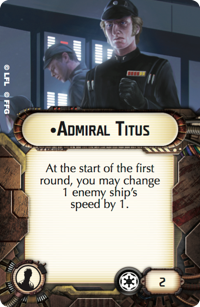
Same boat as Ozzel: a one-time trick with niche but real applications. Can swing an early game if used cleverly, then becomes Vader fuel. 

Verdict: Works as designed.

Agent Kallus

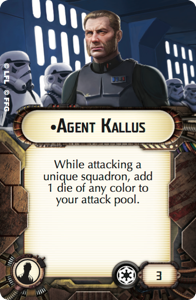
Good card, often useful, occasionally brilliant. His cost is fair with the 4-ace cap in place. Without that cap, he was underpriced. 

Verdict: If I had my way, he’d only work against squadrons with defense tokens — no reason to penalize the generiques.

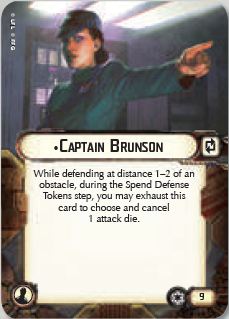
Captain Brunson

The queen of Imperial defensive tech. At 5 points, she was everywhere, since the “within distance 1–2 of an obstacle” clause is barely a restriction in skilled hands. She was rightly pushed up to 9, which curbed her ubiquity. 

Verdict: 9 feels a touch high. 8 would be a sweet spot. But 9 is a lot better than 5, so whatever.

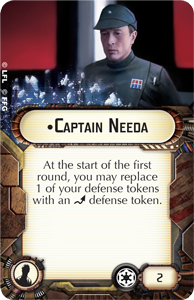
Captain Needa

Goodbye useless Contain, hello Evade. For 2 points, Needa is always valuable — whether enabling TRCs or just letting your ISD actually evade things. Balanced, iconic, and Vader can choke him afterward. 

Verdict: Perfect.

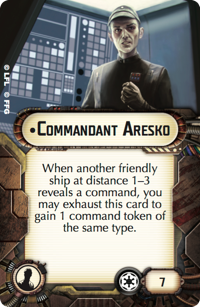
Commandant Aresko

A short-range, clunky knock-off of Yularen. At 7 points, he’s WAY too much. 

Verdict: Drop him to 4 and he might see use.

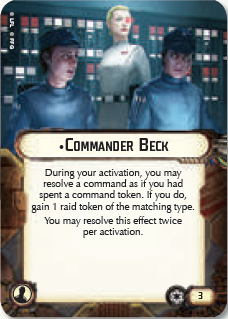
Commander Beck

A fun little enabler. For 3 points, she gives flexibility, with the risk of backlash. Sometimes it pays off, sometimes it stings — as it should. 

Verdict: Leave her alone.

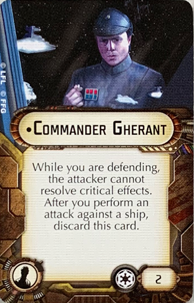
Commander Gherant

Supposed to make the SSD immune to crits on approach, but falls flat. The cost isn’t the problem; the effect just isn’t worth the officer slot. 

Verdict: Binder material.

Commander Vanto

A solid token officer, somewhere between Yularen and Aresko in efficiency. A bit clunky, but good once mastered. 

Verdict: Five points feels right.

Commander Woldar

Decent effect, decent range, fair cost. The only real issue is the Empire’s squad pool — there's too much Swarm and not enough good non-Swarm squadrons to make him shine. I mean, he SHOULD be in there with your Firesprays and Aggressors!

Verdict: A good card limited by context.

Darth Vader (Officer)

This one makes me sigh. Up from 1 to 4 points, but still underpriced. As long as 1-point officers exist (SFO), Vader should be at least 6. Still, he’s undeniably fun — chew through expendable officers for ket rerolls. 

Verdict: A neat concept, but currently too cheap.

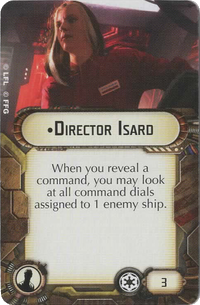
Director Isard

Pure trash. A beginner’s crutch at best. Rework it entirely — something like “guess the top command dial correctly, gain a matching token.” That would actually be useful. 

Verdict: As is? Compactor.

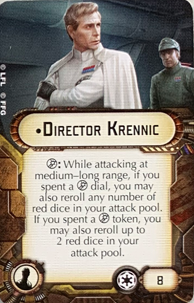
Director Krennic

Suffers from clunky wording and too many conditions. Needs a CF dial and token, medium-long range, and costs 8 points. On an SSD, his range restriction kills him. On a Cymoon or Ravager he’s okay — but again, you’re paying a lot for something fiddly. And at 8 points IMO he's too expensive for the Arquitens.

Verdict: Either reduce his cost by 1–2, or rework him to streamline his effect.

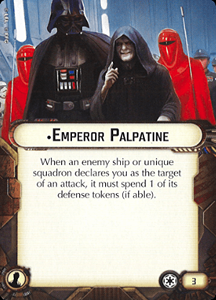
Emperor Palpatine (Officer)

Love this guy. Puts immense pressure on defense tokens, especially with Salvo, Sloane, or Boarding Troopers. All for 3 points! 

Verdict: Realistically, he should be 4. One of the best value officers in the game.

Governor Pryce

A fantastic offensive boost. Need a crit? A hit/crit? Double hit? She delivers. The shield-spending cost is real, but manageable. 

Verdict: She’s fine at 6, maybe 7 at most. Great offensive focus — don’t nerf her.

Iden Versio

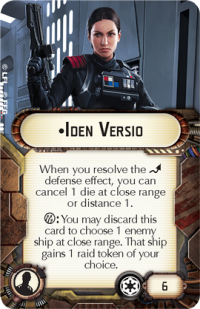
Excellent on a double-evade ship that wants to knife-fight. Six points is fair. Demo likes her, but Tua or Montferrat are often better. Her discard-for-raid trick is irrelevant — if it were exhaust instead, it might actually matter. 

Verdict: Could come down to 5, same as Montferrat, since she's operating off defense tokens AND needs to close. Or Monty could come up to 6.

Instructor Goran

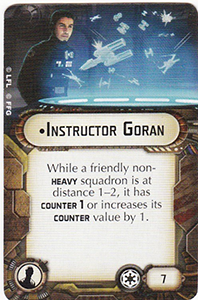
Very niche, potentially very powerful. His ceiling is scary, so his price needs to stay high. That said, he sees so little play that you could test him at 6. Balanced but underused.

Verdict: Maybe reduce to 6.

Lira Wessex

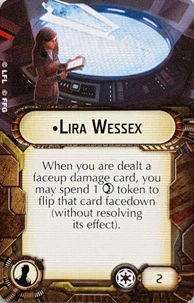
On paper, not bad: repair tokens to flip face-ups. In practice, it only matters on the Executor, with stacked repair tokens, in a crit-heavy meta. 

Verdict: Two points is fine, but the officer slot is too valuable. Lives in the binder.

Minister Tua

Two points to enable a Defensive Retrofit slot — usually ECM. This card highlights Armada’s core flaw: defense token negation is too oppressive, so every large ship needs a “fix.” 

Verdict: She’s sort of fine at 2, given the context. But if you're not on board with the whole reasoning behind her, she should really cost 4+. 

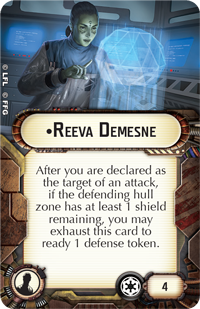
Reeva Demesne

A fantastic officer at a great price. She doesn’t show up as often as she deserves, but that’s only because of opportunity cost. Compare her to Luminara, and you feel the faction disparity. 

Verdict: Leave her alone.

Taskmaster Grint

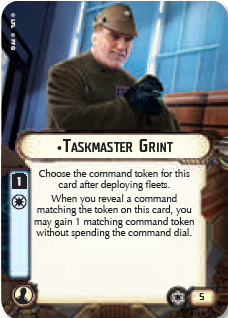
A solid command spammer. But at 5, he’s not worth it compared to modern token officers. Rune Haako is 4 and offers more flexibility. 

Verdict: Drop Grint to 4 and call it even.

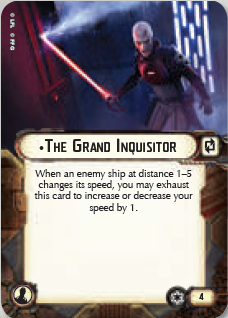
The Grand Inquisitor

Speed manipulation tech as an exhaust triggering of enemy movement? It's kind of interesting in some corner cases, and with Quad Battery Turrets, but overall, this will never be worth 4 points and an Officer slot. But beyond that: why isn't this guy a cool boarding party of some sort? Why doesn't he hand out raids? Or anything other than change your speed? 

Verdict: Reduce to 2 or rework.

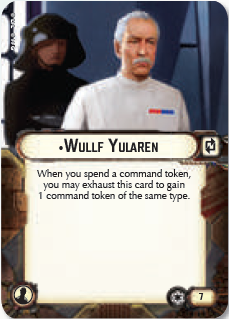
Wulff Yularen

The OG token officer. Still functional, but the game has outgrown him. At 7 he’s overpriced; 5 would be more appropriate. Easier to use than Aresko, less efficient than modern equivalents.

Verdict: Reduce to 5 points.


Final Verdict – Empire Officers

The Imperial officer pool is strong. Some of these cards (Brunson, Tua, Vader, Palpatine, Pryce) are so efficient that they define archetypes. Others (Isard, Gherant, Lira) are so bad they may as well not exist.

The big issue here is balance creep. The early-wave staples still hold up, but modern additions range from over-tuned defensive tech (Brunson at 5 was absurd) to clunky, overpriced experiments (Krennic). The opportunity cost of the officer slot makes anything mid-tier hard to justify, and mostly crowds out the large selection of token handling officers.

Still, compared to the Rebels or GAR, the Empire has one of the most robust officer pools — if you want flexibility, efficiency, or raw power, you’ll find it here. Just don’t expect much design subtlety.

Next Up: Rebel Officers.

Wednesday, September 3, 2025

Special Modifications, Part 3: All Wings Report In

Welcome back to Special Modifications! 

Han Solo once said he’d made a few “special modifications” to the Falcon. Some good, some bad, all of them interesting. That’s the spirit behind this new series: exploring nonstandard Armada. Not just fleet lists or tournament meta, but the underlying strings that hold the game together. What if the designers had pulled them differently? What might have worked better? What happens when you tinker with the system in ways it was never quite built for?


All Wings Report In

Armada’s squadron game has always been… complicated. It isn’t just ships shooting at each other — it’s a full subgame layered on top of ship-to-ship combat, with interactions between squadrons, ships, upgrades, and keywords all tangled together. 

Some players dislike the entire subsystem and would rather play with ships only, while the rest of us enjoy the combined-arms feel that squadrons provide. But that's not today's topic, so let's move on.

Perhaps because of this layered complexity, the initial design (and costing) of generic squadrons didn’t quite land where it needed to. It's not unique to squadrons of course — the cost of the Victory-II or Grand Moff Tarkin anyone?

But back to the snubfighters. From the very beginning, Rebel players in particular had to stack layer upon layer of support pieces to make their squadrons work…

Think about it: Bomber Command Center, Jan Ors, Biggs Darklighter, Norra Wexley, the humble speed-2 YT-1300 acting as a sacrificial escort, and external supports like Jamming Fields, Gallant Haven, and Yavaris. Each piece fills a hole, each props up a weakness. We even got Hera (X-wing) and Fenn Rau (relatively) recently!

Together they formed a precarious house of cards — and that house of cards is what let Rebel squadron play function at all. And then, when everything came together with Rieekan acting as the glue, it became a dominant fleet archetype that persisted for a long time.

Compare that to A-wings, which needed basically zero support. They were fast, self-sufficient, and useful out of the box. And yet — their cost relative to aces, plus their lack of synergy with the Rebel support suite, often left generics by the wayside.

On the Imperial side, the “solution” looked very different. Instead of spreading the load across a dozen support effects, the Empire got one big fix: Admiral Sloane. She transformed their anti-squadron generics into token-stripping monsters while retaining the speed and striking range that Imperial squadrons were already good at. 

Where the Rebels had to glue together half their card pool to get squadrons running, the Empire just stapled Sloane to a fleet and called it a day.

And in her own way, Sloane made for some rather oppressive experiences when you leveraged her with multiple flotillas, unlimited relay, and a sky full of scatter aces...

These experiences tell us something important: many of the base generics were poorly designed or poorly costed.

Fast-forward to the Clone Wars factions, and you can see the contrast. More thought clearly went into the design of GAR and CIS generics, and for the most part, it worked. A fun comparison: the Rebel Y-wing vs the GAR Y-wing. Nearly identical on paper — but the GAR version is considered good, while the Rebel version only ever shines as Gold Squadron. Then again, GAR might be the least-played faction overall, so maybe “good” doesn’t mean quite as much as it should. And those pesky Hyenas are a real menace because they are by far the cheapest — and fastest — generic double-dice bombers. Makes you think: what if ALL rebel Y-wings were like Gold or the TIE Bomber could chuck two reds?

Before we dive in, a quick disclaimer: we’ll be looking at these squadrons in relative isolation. Of course we’re aware that upgrades, commanders, and squadron synergies exist — but we’ve already covered how much of that was bolted on over time to patch holes or rein in excess. For this exercise, we need to strip it back. If the X-wing had been better (and cheaper) from the start, maybe the need for Biggs and Jan Ors would have been reduced — or maybe they would have needed a cost increase or rework. The point is to think about the squadrons themselves, while still keeping overall faction identity in mind.

And to be clear: synergy itself isn’t a bad thing. Armada thrives on clever interactions, layered buffs, and listbuilding puzzles. The problem is when synergy becomes primarily about propping up weaknesses or serving as a stopgap for underpowered units. That’s where Rebel squadron design went astray.

We also need to acknowledge the role of squadron keywords. They’re one of the biggest differentiators between various generics. Some are relatively weak — Grit, for example, is useful but not exactly game-breaking, and could probably stand to be stronger (maybe stacking, or ignoring Heavy squadrons entirely). Dodge can save your hide in niche cases, but since it doesn’t work against flak, it leaves generics like the Delta-7 eternally overpriced. On the other end of the spectrum, Rogue is hugely impactful — it opened up an entirely new way to play squadrons, though it also created the odd timing puzzle of “rogues act last one round, then regular squadrons first the next round,” which has very little counterplay. And of course, Intel used to be borderline broken (or at least it didn't offer enough counterplay) in its original form, while its 1.5 rework just hands out Grit — which is perhaps too weak. Finally, some keywords are worth less because they are on the "wrong" platform. Belbullabs and Screen anyone? Now imagine Hyenas having Screen instead. See my point?

We won’t go into detail on every keyword here — that’s probably a post of its own — but keep in mind that they’re part of the reason some generics shine while others never quite justify their points.

And we need to mention one other structural issue: single-die bombers. Right out of the gate, they felt underpowered. Their anti-squadron firepower is bad, and against ships their damage output is only moderate. Compare that to the punch of a two-dice bomber, and the gap is massive. That doesn’t mean the answer is to just make everything a two-dice bomber — that would be going overboard. But it’s worth considering, case by case. For example: what would be the pros and cons of making every Y-wing as good as the aforementioned Gold Squadron? We’ll come back to that when relevant.

And then there’s the bulk freighter in the hangar: the relatively small cost gap between generics and aces with defense tokens. That small difference in points value was a big reason we eventually saw the “ace cap” of four per fleet. (That’s a topic for another post, but it’s critical context here.) Ideally, both aces and generics should be costed appropriately, but that’s just not where Armada ended up. If a generic A-wing is 11 points, there’s no way Tycho Celchu at 16 is correctly priced.

So in this installment of Special Modifications, we’re going to do a faction-by-faction study of the generic squadrons: what they cost, what they bring to the table, and how they should have been designed to compete with their ace counterparts.

Oh, and don't forget: this is a Special Modifications feature, so we're deep diving into the game's systems for the fun of it, not because we're actually redesigning anything.


Rebels: Tricks to Make Mediocrity Work

The Rebel Alliance’s squadron identity has always been a little awkward. On paper, they were meant to be slower but tougher than the Empire, with more generalist squadrons that could fill multiple roles. They also had a clear bomber tilt: three of their four core generics are bombers (X-wings, Y-wings, B-wings). Add to this their famous rogues — especially unique rogues — and you’d think Rebels were spoiled for choice.

In practice, their generics struggled.

From day one, Rebel squadron play leaned heavily on support pieces. Cards like Bomber Command Center, Jan Ors, Biggs Darklighter, Norra Wexley, and, later, Hera Syndulla. The humble speed-2 YT-1300 with Escort just to eat Empire alpha strikes. Add external supports like Jamming Fields, Gallant Haven, or Yavaris, and the picture becomes clear: Rebel squadrons were never good enough on their own. They needed layers upon layers of aura buffs and synergies to become competitive. And, of course, Rieekan only works on unique squadrons...

This is why Rebel identity eventually became synonymous with synergy. Not because it was the original intent, but because it was necessary. Rebels became the faction that took mediocre baselines and made them dangerous by combining Jan with Biggs, or Toryn with BCC, or Yavaris with B-wings.

Looking at the generics themselves:

  • X-wings should have been the workhorse — escort + bomber — but they were always a little too expensive for what they did, and underwhelming without help.

  • Y-wings were cheap and tanky, but their inefficiency showed quickly. Only Gold Squadron really made them shine.

  • B-wings hit like a truck, but were so painfully slow that you basically needed Yavaris and FCT to make them work. Eventually, B-wings really mean just Ten Numb.

  • A-wings were the exception — fast, self-sufficient, and genuinely useful. Yet even here, the small cost gap between generics and aces (Tycho, Shara) left players asking: why not just pay a few more points for something strictly better?

So yes, Rebels had options. But they had to work twice as hard to make them pay off. Their squadron identity became “the synergy faction” largely because their generics were too weak to stand on their own.


Empire: One Card to Rule Them All

The Empire’s identity was sharper from the start: faster, more specialized squadrons, but also frailer than the Rebels’. TIEs swarmed, struck, and died. Most Imperial squadrons did one thing well — shoot ships, intercept squadrons, or soak hits — and that was it. Bombers were rarer, and rogues existed but never matched Rebel equivalents.

What really defined the Empire was how fragile their generics were compared to their aces. A TIE Fighter or Interceptor was cheap and fast, but also disposable. Aces, on the other hand, were only a handful of points more expensive but infinitely more reliable. Sound familiar?

The Empire’s “fix” came not through stacking supports, but through one card: Admiral Sloane. She turned the Empire’s plentiful anti-squadron dice into token-stripping weapons, giving their generics a new lease on life. Suddenly, TIE Fighters weren’t just disposable speed bumps — they were part of a fleet-wide denial engine that could cripple enemy defenses while still keeping up with the action. Where Rebels had to glue together half their upgrade deck to make squads viable, the Empire could just staple Sloane to a fleet and watch it hum.

Looking at the generics themselves:

  • TIE Fighters were iconic, dirt cheap, and fragile. Perfect spam, but easily outclassed once aces entered the picture.

  • TIE Bombers were semi-efficient ship-killers but needed escorts to avoid instant death, and their single attack die makes them hard to leverage in one activation.

  • TIE Interceptors had speed and teeth, but paper-thin hulls made them unreliable.

  • TIE Advanced became the “escort tax” — overpriced for what they brought, useful only for protecting bombers and aces.

  • Later designs like the TIE Defender were almost too good, while Phantoms were clever but rarely impactful.

In short: Empire generics were sharper tools, but also brittle and overshadowed. Without Sloane, they struggled. With Sloane, they suddenly had an identity: oppressive domination.


Galactic Republic: Lessons Learned (Mostly)

The Republic’s generics were clearly designed with hindsight. On paper, they look a lot like the Rebel lineup: Torrent escorts instead of X-wings, Y-wings still the bomber backbone, ARCs as the heavy option, and Jedi aces in place of A-wings. But the balance was much tighter.

Where Rebels needed synergies to make their squads work, GAR generics were at least functional on their own. They weren’t flawless, but they were playable without an entire web of aura buffs. The tradeoff was that GAR fleets were built around tight ship–squad synergy — their ships and squadrons needed to work hand-in-hand more than any other faction.

Looking at the generics:

  • V-19 Torrents were cheap escorts, filling the X-wing role at a lower cost. Individually unimpressive, but in groups they formed a decent screen.

  • Y-wings were, well, Y-wings — but unlike Rebels, GAR’s version was tuned well enough to be worth fielding.

  • ARC-170s were heavy, tanky hybrids — slow, yes, but flexible enough to justify their cost.

  • Delta-7 Jedi Starfighters… and here’s where the cracks show. On paper, they’re impressive: speed, accuracy, and Jedi keywords. But at 17 points for 4 hull, they’re laughably fragile for the price. If you wanted to pay ace-level cost for a disposable body, this was the way to do it.

Overall, GAR showed what Rebel design could have looked like if more thought had gone into generics from the start. Not perfect, and occasionally way off (looking at you, Delta-7 generics), but a marked improvement.


Confederacy of Independent Systems: Swarms Done Right (Mostly)

CIS squadrons were in many ways the Empire 2.0. They shared the same fast, specialized, fragile profile — but their generics were simply better tuned. The AI keyword added a twist: CIS squadrons were predictable, but also efficient and effective when commanded properly.

If the Empire’s identity was speed and specialization, CIS added quantity. Their swarms were the truest “disposable horde” in Armada, and they worked.

Looking at the generics:

  • Vulture Droids were the cheapest of the cheap, but actually good at being disposable. Spam them and watch them trade up.

  • Hyena Bombers gave CIS a reliable bomber backbone, tuned better than Imperial or Rebel equivalents.

  • Droid Tri-Fighters were fast, lethal, and fragile — basically what TIE Interceptors always wanted to be.

  • Belbullabs though… what even is this? Zero synergy with the rest of the fleet, a weak Relay that barely matters, and Screen — a keyword that sounds good but in practice just means “ignore me until last.” And to cap it off, they’re overpriced for the package. No wonder you almost never see them.

The result was a faction whose generics mostly worked — CIS generics didn’t need endless support or a one-card commander fix. But when they whiffed (cough Belbullab cough), they really whiffed.

Next Up: In the next part, we'll explore some possible solutions and visualize them all.

Battle for Endor 2025 – Round 2 Pre-battle analysis

Quick status update as of 3 Sept. 

My POD is already well into round 2, with 2 of 6 games already played (excuse the hand edits, I made it fast and dirty).

Anyway. 

My round 2 opponent is UK-based Mr Frisky. I've appended his list and my previous quick anlysis for your convenience.

What I wrote before still holds true: These are some really slippery pigs. 

Fleet contains five small speed 4 (the transport has QS) ships, so if he doesn't want to fight, I can TRY to exert pressure, but catching any number of his ships that try to run is effectively pointless. If I'm first player (we're tied for points, so could happen) that'll help a little bit, but not a whole lot.

So what will this match look like? It's largely up to my opponent. Regardless of who is first player, if he wants, he can try to go for a small win by bagging a flotilla or sniping my squadrons. Maybe go for a cautious 6-5 or 7-4.

But for what?

I'm at 4 TP, he's at 3, so if we just split the points, we end up near the bottom of the ladder regardless of who wins!

So ideally, one of us (preferable me) should win 10-1. 

But can the Slippery Pigs table me without losses? It's possible but not likely. 

They can, however, accomplish it with light losses for a 9-2 which would also be good. The MC30s have a lot of firepower and if handled correctly, with CR90s moving into range at the right time, can take down an Onager + ISD combo. But it has to be expertly flow or losses on his side could quickly mount, and then the balance might swing in my favor.

Beyond this general assessment, there isn't too much to say as a lot of the decissions lie with the faster fleet. We could both win, big or small, depending on how Mr Frisky wants to approach the game.


Mr Frisky 

Slippery Pigs... what an apt name. Catching twin CR90s and MC30s under Madine is HARD! Ships are decently hard-hitting, but they will need to maneuver very well, not only to stay alive but to deal concentrated fire upon enemy ships to bring them down. Squads are mostly for screening, but the A-wings do have speed 5 and black dice, so they cannot be discounted in the AS role.

This is a challenging list to catch for anyone, including my own fleet. If, and that's a big if, I can catch a ship, I can kill it, but yeah, that's the trick, isn't it?


Name: The Slippery Pigs

Faction: Rebel

Commander: General Madine (30)


CR90 Corvette A (44)

• General Madine (30)

• General Draven (3)

• Heavy Fire Zone (2)

• Jaina's Light (5)

= 84 Points


CR90 Corvette A (44)

• Ezra Bridger (3)

• Turbolaser Reroute Circuits (7)

= 54 Points


MC30c Torpedo Frigate (63)

• Walex Blissex (5)

• Ordnance Experts (4)

• Rapid Reload (4)

• Heavy Turbolaser Turrets (4)

• Admonition (10)

= 90 Points


MC30c Torpedo Frigate (63)

• Expert Shield Tech (5)

• Ordnance Experts (4)

• Rapid Reload (4)

• Heavy Turbolaser Turrets (4)

• Foresight (10)

= 90 Points


GR-75 Medium Transports (18)

• Ahsoka Tano (2)

• Parts Resupply (3)

• Quantum Storm (1)

= 24 Points


Squadrons:

• Rogue Squadron - X-wing Squadron (14)

• Shara Bey - A-wing Squadron (17)

• Tycho Celchu - A-wing Squadron (16)

• A-wing Squadron (11)

= 58 Points


Total Points: 400

Tuesday, September 2, 2025

The Upgrade Files: Case 15 – Officers (Neutral)


If the Weapons Team slot is the “muscle” and Defensive Retrofits are the “armor,” then Officers are the brains of the operation. This is one of the most hotly contested slots in the entire game. On most ships, you’ll fill it without hesitation. Indeed, on your more valuable ships, you’ll wish you had two or more.

And it’s not hard to see why: there are some absolutely stellar unique, faction-locked officers — think Adar Tallon, Minister Tua, Darth Vader, or the GAR/CIS token menagerie. Compared to that, the humble neutral officers don’t always shine. They lack the flashy tricks or faction synergies and often feel like filler.

But that doesn’t mean they’re worthless. Some are staples, some are solid utility, and yes — a few belong in the trash compactor. Let’s go through them all.


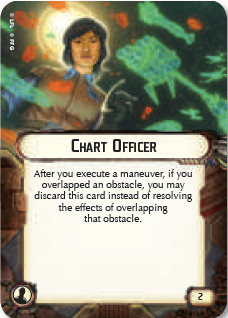
Chart Officer

One of those “forgotten” cards that actually has a niche. In Rebellion in the Rim Expanded where maps are smaller but obstacle density is the same, Chart Officer suddenly looks appealing. On standard 400? Not so much. The effect is handy, but the opportunity cost is brutal: you’re slapping this on a medium or large ship that probably wants an Intel Officer, an Expert Shield Tech, or some juicy faction officer instead. 

Verdict: Balanced, useful, just rarely taken.


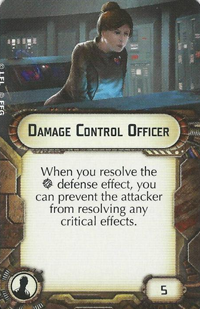
Damage Control Officer

At 5 points this was overpriced; at 3 points it’s at least something you might think about. Preventing crit effects is very strong in theory, but in practice it’s niche. Unless you’ve got multiple Contains and/or multiple officer slots, you’re probably passing this over. Still, if crit spam ever rises (nuScreed, future upgrades, or some meta shift), DCO might finally find a permanent home. 

Verdict: For now, fine but fringe.


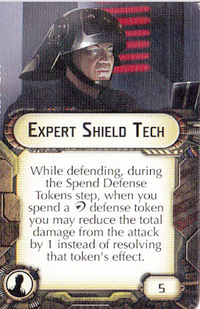
Expert Shield Tech

Now we’re talking. If you’ve got double Redirects, or you’re running Luminara (and I guess Obi-Wan), this is a fantastic card. Even with one redirect, it can be worthwhile, though less so. At 5 points, it’s not exactly overpriced, shall we say?

Verdict: No tweaks needed; this one is already a staple.


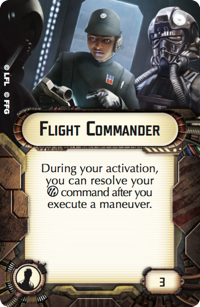
Flight Commander

Three points for some dial sequencing flexibility — not bad. Lets you move first, then launch squadrons, without needing Boosted Comms. On some carriers this is excellent, on others it’s redundant. 

Verdict: The opportunity cost hurts, but 3 points is fair.


Hondo Ohnaka

Ah, Hondo. The one unique neutral officer. And let’s be honest: Hondo isn’t really neutral — he’s always working for Hondo. For 2 points he’s a steal. He’s in basically every fleet, and while it’s fun to have a ubiquitous pirate running around, his downside is usually so minor that it hardly registers. 
Verdict: Realistically, he should be 3 points. But since Hondo’s offered me a “special deal” on some coaxium, we’ll leave him at 2.


Intel Officer

The OG. Seven points is a lot, but Intel Officer has been deleting defense tokens since Wave 1. Still valuable, still feared. Its stock dipped a little with the rise of Thermal Shields (our lord and savior, at least until they get a cost bump), but the fact IO remains relevant in the face of those kinds of meta shifts speaks volumes. 

Verdict: Leave as is.


Skilled First Officer (SFO)

One of the few 1-point upgrades in the game, and worth every bit. Great for Command 2+ ships that need dial flexibility, and also doubles as a remote “choke victim” for Officer Vader. 

Verdict: That specific Vader interaction does make a 1-point officer somewhat problematic, but we'll leave it as is.


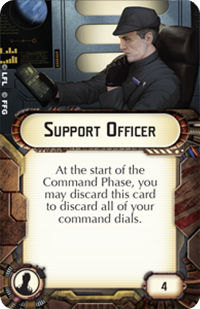
Support Officer

The “premium” SFO. Now at 2 points, it’s fair. Lets you reshuffle your entire stack, which can be clutch, but the opportunity cost usually keeps it niche. 

Verdict: Balanced, if rarely seen.


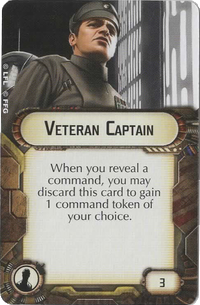
Veteran Captain

At 3 points this was laughable. At 2 points it’s tolerable. Is it better than Skilled First Officer? Rarely. Better than Hondo? Definitely not. Still, the one-time token can be nice in a pinch, especially if you’re stretching command economy. 

Verdict: It’s fine.


Defense Liaison

In theory, decent. In practice, terrible. You’re paying points and a token tax to swap commands, and giving up the officer slot for the privilege. Nobody is taking this over the other options. 

Verdict: Should be 2 points at most, and even then you’d hardly ever see it.


Weapons Liaison

Same problem as Defense Liaison, but with different commands. 

Verdict: Same fix: cut it to 2, and it’s still niche.


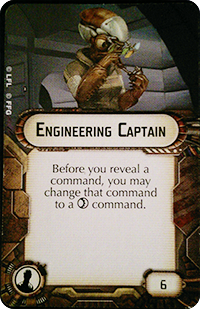
Engineering Captain

Always being able to switch to Repair sounds handy… until you realize it’s 6 points and an officer slot. Nobody is paying that when better, cheaper officers exist. 

Verdict: Not worth more than 4 points, and even 3 would be fine. As is, binder fodder.


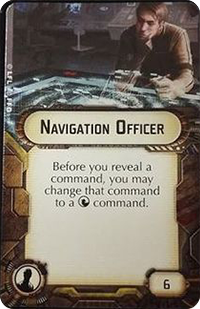
Navigation Officer

Same as Engineering Captain, but for Navigation. Nav is arguably more valuable, but not that valuable. 

Verdict: Needs the same price cut (3–4 max).


Tactical Expert

You guessed it: same template, this time for Concentrate Fire. Again, 6 points is way too much. 

Verdict: 3 or 4 is where it belongs.


Wing Commander

The squadron version of the Captain/Officer cycle. This is the one that might justify 4, since squad commands are often the most valuable dial in the game. Still, 6 is too high. 

Verdict: Another card begging for a discount.


Final Verdict – Neutral Officers

The neutral officer pool is a tale of two halves. On the one hand, you’ve got excellent staples (Intel Officer, Expert Shield Tech, Hondo, Skilled First Officer). On the other hand, you’ve got overcosted chaff (Engineering Captain and friends, and the Liaisons).

The big issue is opportunity cost. Officers are such a contested slot that any card that isn’t cheap, powerful, or both is automatically disqualified. Why pay 6 points for a one-dimensional command swapper when you could take Hondo, an Intel Officer, or a faction officer instead?

If these overpriced duds were brought down to 2–4 points, we’d probably see more variety. As it stands, neutral officers are a handful of staples surrounded by a wasteland of binder fodder.

Next Up: Officers of the Imperial persuasion.